About Tansi
Built from experience, not theory
Tansi was not designed in a boardroom. It came out of thirty years of watching good organizations get buried by their own paperwork.
30Years running budgets, procurement, contracts, compliance and workforces in the thousands
2015In live operation ever since — and still evolving around client needs
229Public health warehouse locations supported by our inventory and asset capabilities
SOC 2 Type 2
TX-RAMP Level 2Independently audited and state-certified for public-sector use
TX-RAMP Level 2Independently audited and state-certified for public-sector use
01 — Our Story
A real operational problem became software
Tansi did not begin as a product idea. It began as a set of problems that had to be solved on live operations, with real consequences for getting them wrong.
Before Tansi was software, the people behind it were running operations.
That experience included responsibility for budgets and cost control, procurement and contracts, contractor management, compliance, field operations, and workforces numbering in the thousands. It meant dealing with the reality of large programs: multiple contractors, multiple locations, large inventories, changing workforces, regulatory requirements, and information spread across systems that were never designed to work together.
The problem was rarely that an organization did not have enough software.
The problem was that it had too much of it.
Training lived in one system. Certifications in another. Assets and inventory in a third. Finance and HR had their own systems. Critical processes still depended on paper forms, spreadsheets, email, and manual approvals.
And many of those systems could not simply be replaced.
They were too deeply embedded in the operation, too expensive or disruptive to migrate, tied to other systems, or simply doing a job well enough that replacing them made little practical sense.
The result was a layer of work in between.
People became the integration.
Every compliance report meant pulling information from several places. Every audit response meant finding records, reconciling them, and figuring out which version was correct. Supervisors maintained spreadsheets because the system did not capture what they needed. Operations staff entered the same information more than once because one system could not communicate with another.
That was the problem Tansi was built to address.
Before Tansi
This was not the first product built to solve a real operational problem
Two products came before Tansi, and neither of them came out of Tansi. Both started the same way: a problem encountered on live work that no available tool solved.
Our founder did not write the code for either one. His contribution was the one he still makes — seeing the operational problem clearly enough to define what the solution had to do, planning the build, and working with the people who built it.
First
A cost-control system
Conceived and planned to fix a problem on a program already underway, because the existing tools did not provide the information needed to manage the operation. It was never intended as a commercial product.
The system worked. Other organizations wanted to use it. It became a commercial product and was later sold.
Second
A venture in a different sector entirely
Applying sensing and data analysis to information that mining and exploration companies had always collected but could never fully use. He was a part founder and co-owner, and led the initial planning that defined what the product had to do.
He later sold his interest to his partner. The company continues to operate today.
The lesson was more important than either product.
The difficult problems in large organizations are often not contained within a single department or system. They exist between systems, between processes, and between the information different parts of an organization need from one another.
That became the foundation for what would eventually become Tansi — this time built to stay, and built around the operation rather than around a single problem.
Proven at scale
Experience at the scale where systems are tested
Tansi's development has been shaped by work on large-scale infrastructure programs, including two multi-billion-dollar programs in North America.
These were not environments where software could be evaluated in isolation.
Operations involved large workforces, multiple contractors and locations, significant inventories, procurement and compliance requirements, and the constant movement of people, equipment, materials, and information.
Several Tansi modules were used to support those operations. In some cases, Tansi replaced systems that had already been selected and deployed but had failed to meet the operational requirement. In others, Tansi provided capabilities that the existing project systems did not have.
The platform was not imposed as an attempt to replace everything already in place.
It was used where it was needed.
Adapted mid-program
When the requirement changed, the platform changed with it
Partway through a live program, an organization needed something that did not exist yet — not in our platform, and not in anything available to them. The requirement was new, the timeline was immediate, and the operation could not pause while it was solved.
We listened, designed around what was actually needed, and delivered it into a running operation within weeks — without interrupting the work already underway.
It was adapted, not rebuilt.
What that meant in practice
- A required event could be scheduled and recorded against a specific person and date.
- The resulting record could be tied directly to the operational decision that depended on it — including site access.
- Controlled items could be tracked by lot number and expiration date, so nothing expired unnoticed.
The work also exposed requirements that had not previously existed in the platform.
Those requirements became part of it.
Lot tracking, controlled-item management, and expiration dates were incorporated into the inventory and asset management capabilities. That same functionality now supports inventory operations across 229 public health warehouse locations.
This is how much of Tansi has developed.
01 — Requirement
A requirement appears in the field.
02 — Need
The organization needs a way to handle it.
03 — Adapt
The platform is adapted to meet it.
04 — Keep
What proves useful becomes part of the product.
Proven in service
Years of successful operation
Tansi has been running real operations since 2015. It is a proven platform, not a work in progress.
It is also not finished — and it never will be.
Development does not stop, because the requirements do not stop. Programs change, regulations change, and the work in front of an organization this year is not the work it faced last year. New capability gets built because a client needed it, and that is the only reason it gets built.
Over that time the platform has been used, adapted, expanded, and tested in environments where the consequences of getting the information wrong are real. That has revealed details that are difficult to learn from a requirements document alone.
01What the work actually requires at the place it happens — which is rarely what the process document assumes.
02What information an auditor will ask for two years after a project closes.
03How inventory actually moves through a distributed operation.
04Which reports people rely on and which ones never get opened.
05Where a process that looks simple on paper becomes difficult in the field.
Very little of Tansi was designed in isolation. Its capabilities exist because they were needed in actual operations, and its development has been guided by what happened when those capabilities were put to work.
02 — Why Tansi
What makes the platform and the way we work different
Most operational software asks an organization to change to suit the product. Tansi was built on the opposite assumption.
The core difference
Working with the systems that are already there
Tansi is built around a practical reality that is particularly important in government and large organizations:
The system you need to work with is often the system you cannot replace.
An agency may have a financial system, an HR system, a records system, a procurement system, or a specialized application that has been in place for years. Replacing it may not be realistic.
Tansi does not require an organization to start over. It is designed to operate alongside existing systems and address the operational gaps between them — bringing together information, workflows, records, assets, and people without requiring every underlying system to be replaced.
The objective is not to change a system simply because a newer system exists. The objective is to solve the operational problem.
01 — Configuration
Tansi bends to your operation
You should not have to abandon a process that works, or a statute you operate under, because a vendor's software cannot accommodate it. Configuration happens around how your teams already work.
02 — One platform
Modules, not a stack of separate products
Workforce onboarding, training and certification, safety and compliance, assets and inventory, digital forms, corrective actions and reporting run in one system — so the record is entered once and read everywhere.
03 — Execution-first
ERPs are good at planning. They are poor at execution.
Most enterprise systems are built for the office: the plan, the budget, the schedule, the report. They fall down at the point where the work is actually carried out. Tansi is built from that end — capture where the work happens, offline where there is no connectivity, in a form the person doing the job will actually complete.
04 — Audit-ready
Records that hold up whenever they are asked for
Compliance reporting, certification currency, corrective actions and inventory movements are captured as they happen, with the history intact — so an audit response is a query, not a reconstruction project, however long after the fact it comes.
05 — Proportionate
Deploy the parts you need
Tansi has been used as a full platform and as a handful of modules filling gaps in an existing environment. You are not required to take capabilities you have no use for.
06 — Accountable
One organization, start to finish
Implementation, support, engineering, integration and product development are handled in-house. Feature requests, security questionnaires and escalations end at the same desk — not with a partner, a reseller, or an offshore contractor.
How we work with agencies
One on one
The way an implementation begins determines most of what follows. We would rather spend the time up front than discover the mismatch after go-live.
01 — Listen
Before we configure anything
How your teams actually work, where the process breaks down today, what your reporting and retention obligations require, and what has already been tried and failed.
02 — Plan
Around what we heard
Then we show you the solution before you commit to it — not after award, and not after go-live.
03 — Support
The same people, afterward
The team that configured your deployment is the team that answers when you call. A small district gets the same attention and the same support tier as the largest agency we serve.
03 — Mission & Values
What we are for, and how we hold ourselves to it
Our mission
To give the people running complex public operations better information — without asking them to rebuild everything around it.
CORE
What the platform is built to deliver
Four commitments that govern what we build and what we will not compromise on.
C
Compliance
The record has to stand up — to an auditor, a regulator, and a records request. Compliance is the requirement, not a reporting feature bolted on afterward.
O
Ownership
We own the platform, the roadmap, and the outcome. Nothing important is handed to a third party and nothing important is somebody else's responsibility.
R
Reliability
Systems that people depend on during a shift, an emergency, or an audit have to work every time. Availability and data integrity are not negotiable.
E
Excellence
Software that survives contact with real operations. If a capability does not hold up in the field, it does not stay in the product.
TRUST
How it is delivered
Five commitments that govern how we work with the organizations who rely on us.
T
Transparency
Clear answers on capability, timelines, security and cost — including when the answer is no.
R
Reliability
We do what we said, when we said. Commitments are kept at the scale of a single support ticket and a multi-year program.
U
Understanding
We learn your operation before we propose anything. Context first, configuration second.
S
Service
Real people who know your deployment, reachable when you need them. Support is a relationship, not a queue.
T
Teamwork
We work as part of your team, alongside your staff and your existing vendors — not around them.
What that means in practice
- Personalized support — the people who answer know your configuration.
- Real people, not a ticket portal and an automated reply.
- Nothing outsourced overseas.
- Implementation, support, engineering and product development in-house.
- The same support tier for a small district as for the largest agency.
- Direct access to the people who build the platform.
The standard we hold ourselves to
If you are not satisfied, then we have failed — and failure is not an option.
That is not a warranty clause. It is how we decide whether an engagement is finished: not when the software is installed, but when the operation is working better than it was before we arrived.
04 — The Company
Tansi LLC
The United States company, the platform ownership, and the assurances a public-sector buyer needs on file.
United States
Austin, Texas
Tansi is an established public-sector software platform with a history that predates its U.S. operations. As the business has expanded into the United States, its corporate structure has evolved while the platform, leadership, and direction have remained consistent.
Today, Tansi LLC, headquartered in Austin, Texas, owns and operates the Tansi platform in the United States. It owns the underlying intellectual property outright and provides the platform directly, with U.S.-based personnel, support, and data residency.
The platform's earlier corporate history includes Tansi Software Inc., formerly Indigetech Software Inc. The company name was changed to align with the Tansi brand. These names may still appear in older contracts, procurement records, or other public references. They refer to the same platform and its operating history — not a different product or a new software offering.
What has changed is the U.S. corporate presence. What has not changed is the platform, the management behind it, or the direction of the business. Tansi LLC represents the continuation of that same platform and vision in the United States.
HeadquartersAustin, Texas
Support & deliveryU.S.-based, in-house — nothing outsourced overseas
Data residencyU.S. data stays in U.S. Azure regions
AssuranceSOC 2 Type 2 · TX-RAMP Level 2
OwnershipTansi LLC owns the platform intellectual property
Data residency
Your data stays in your country
Tansi is hosted exclusively in Microsoft Azure regions within the country of data origin. United States customer data is held in United States regions and does not leave the country.
No data ever leaves the country.
Application data
Logs
Backups
Attachments
Metadata
In-region, in-country, without exception
Assurance
Independently verified
SOC 2 Type 2
Independent audit of security, availability and confidentiality controls over an observation period — not a point-in-time snapshot. Report available under NDA.
TX-RAMP Level 2
Texas state certification for cloud services handling confidential data, accepted by Texas state agencies and institutions of higher education.
Third-party penetration testing
Independent security assessment of the platform conducted by an external firm, with findings remediated and re-tested.
05 — Meet the Team
The people who direct the platform
A small management team by design. The people who set the direction of the platform are the people who configure your deployment and answer when you call.
Who you work with
No account layer between you and the people who direct it
Most software companies put a sales team in front of a support queue in front of an engineering team you will never speak to.
Tansi does not work that way. Implementation, support, engineering and product development are handled in-house, and the leadership below sets direction across all of it. When you raise a requirement, it reaches the people who can decide whether it goes into the product — usually in the same conversation.
Nothing is outsourced overseas.
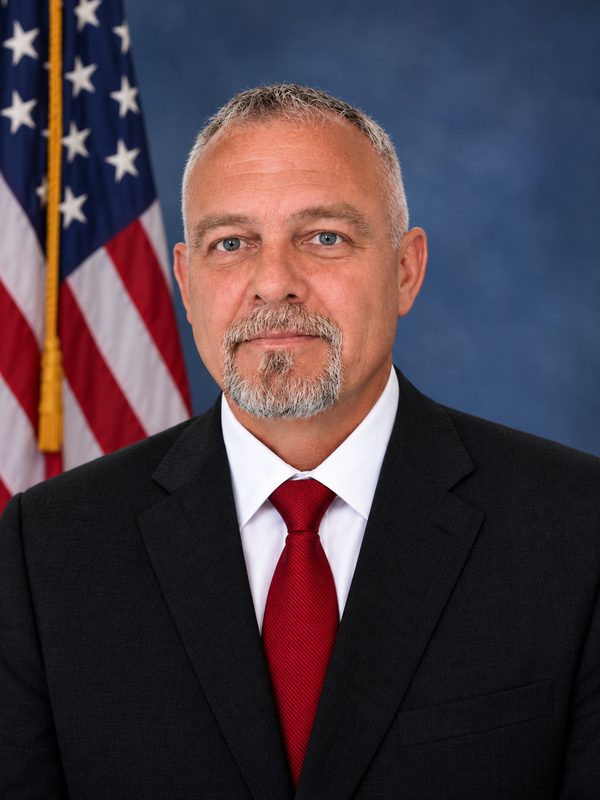
Wade Mahowich
Founder & President
Thirty years running operations before writing a line of software — budgets, procurement, contracts, compliance and workforces in the thousands. Founded Tansi in 2015 to solve problems he had lived with.
Read background
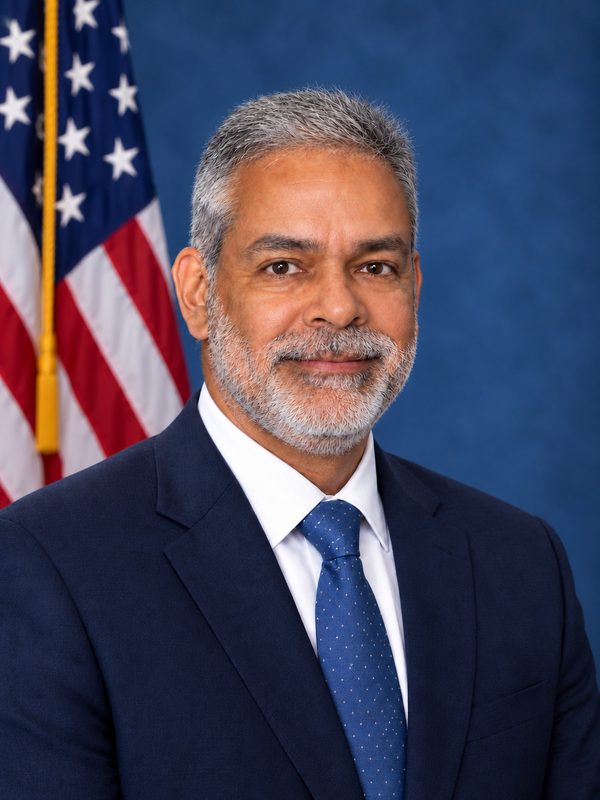
Daniel A. Sanabria
Senior Development Manager
Twenty-five years building enterprise web applications across financial services, healthcare and higher education — including over a decade on university systems serving thousands of daily users.
Read background
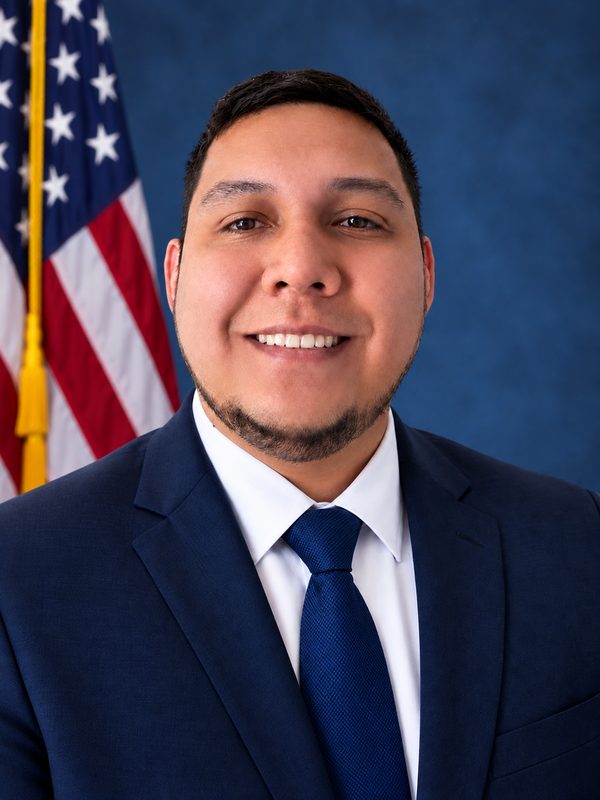
Cesar Cebreros Lara
Senior Development Manager
Leads platform architecture, the security model, cloud infrastructure, integrations and release management — making sure the platform gets built right, ships on time, and stays secure.
Read background
In depth
Leadership backgrounds
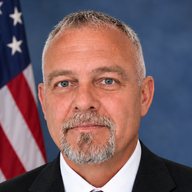
Wade Mahowich
Founder & President
Wade started at the bottom of the industry and worked his way up — through the field, consulting, safety leadership and project management, until he was ultimately accountable for entire programs and organizations.
Over nearly three decades, he has owned and operated companies across energy consulting, safety services, project management and technology. That experience has given him a practical understanding of virtually every function that makes an organization work: business development, accounting, contracts, procurement, project management, safety, workforce compliance, client relationships and field operations.
He has planned and managed energy projects across Western Canada and internationally, with responsibility for budgets, procurement, contracts, logistics, cost control and close-out. He has also led compliance and reporting programs on two multi-billion-dollar infrastructure programs, where Tansi was deployed into live operations.
A consistent focus throughout his career has been finding better ways to manage complex work. He has conceived, designed and helped bring to market software for project management, cost control, field reporting, sensing and data analysis — often starting with a problem he encountered firsthand in the field or while managing a live program. His role has been to understand the operational problem, define what the solution needed to accomplish and work alongside the people who turned that vision into working technology.
That experience is at the heart of Tansi. Having spent years managing the people, processes, compliance requirements, assets, costs and reporting that keep complex organizations running, Wade saw the need for a system that connected those pieces rather than managing them in isolation.
Tansi is the result — a modern operational ERP platform built around the realities of day-to-day operations. It brings workforce readiness, assets, inspections, compliance, reporting and execution together in one connected system, giving organizations greater visibility, accountability and control over how work gets done.
Today, my focus is helping organizations replace disconnected tools and outdated processes with practical technology that works in the real world — software built from real operational experience, not theory.
Wade Mahowich, Founder & President
Commitments & Goals
- Personalized service. You deal with the people who make the decisions, not a queue.
- Owner involvement. I am personally involved in every engagement, from the first conversation onward.
- Client success. Measured by whether your operation is working better — not by whether the software is installed.
- Direct escalation. If something is not right, it reaches me.
- Same tier for everyone. A small district gets the same attention as the largest agency we serve.
- Nothing outsourced overseas. The people you talk to work here.
- Long-term relationships. We are building a platform that outlasts the contract, not closing a sale.
Direct contact
Emailpresident@tansi.io
Toll free1-844-TANSIAPP1-844-826-7427
Reach out directly — ask for Wade. You will get an answer from me, not a routing system.

Daniel A. Sanabria
Senior Development Manager
Daniel brings more than twenty-five years of building, maintaining and modernizing enterprise web applications — across financial services, healthcare, e-commerce and higher education.
Before joining Tansi he spent over a decade at a major university as a Web Applications Developer and QA Analyst, building complex intranet systems, a cross-departmental data warehouse, a full-featured administrative booking system and large-scale CMS integrations — all supporting thousands of active users across the institution. That work built a rigorous understanding of enterprise-scale requirements: data integrity, system reliability, security, performance, and the discipline required to manage legacy systems alongside new development at the same time.
Earlier in his career he worked across the Americas — building e-commerce platforms, financial transaction systems, healthcare software and web services. He re-engineered a healthcare plan management system handling sensitive personal data, and led UI development and device integration for interactive transaction machines deployed at more than 200 point-of-sale locations.
At Tansi his work spans full-stack development across workforce onboarding, safety management, training and certification tracking, asset management, digital forms, compliance reporting and API integrations — plus the legacy modernization work that keeps older client systems connected to the platform.
He holds two Bachelor of Science degrees, in Computer Science (with Distinction) and Systems Engineering, an IT Management Certificate, and a Sitecore Certified Developer designation. He is fluent in English and Spanish.
Focus
- Module development across the platform
- APIs and third-party data exchange
- Database design and optimization
- Legacy system modernization
Technical
- C# · ASP.NET MVC / Core · Blazor
- T-SQL · SQL Server · SSRS / SSIS
- RESTful APIs · SOA
- Sitecore CMS · AWS
- QA, testing and full SDLC

Cesar Antonio Cebreros Lara
Senior Development Manager
Cesar leads development across the Tansi platform, with responsibility extending well beyond development management: technical architecture, system security, cloud infrastructure, API integrations, quality assurance and release management.
He designs and enforces the platform’s security standards — role-based access controls, data encryption, secure API design and audit logging — the controls that let Tansi meet the compliance and privacy requirements of the organizations that rely on it.
Cesar architects solutions, writes and reviews code, sets engineering standards and mentors developers, while managing timelines, stakeholder communication and delivery accountability across the development organization. He is equally comfortable discussing system architecture with developers, walking a client through the security model, or presenting a technical roadmap to leadership.
Managing a multi-module platform of this scope requires more than technical leadership. It requires understanding how diverse business processes connect, how data flows between modules, how third-party integrations have to be designed for reliability, and how access controls must be architected to protect sensitive workforce and compliance data.
He holds a Diploma in Computer Software Development and is bilingual in English and Spanish.
Focus
- Platform architecture and system design
- Security model and access control
- Cloud infrastructure and DevOps
- Integrations and release management
Technical
- C# · .NET Core · Blazor
- RESTful APIs · SQL Server
- Azure AD · CI/CD
- iOS and Android development
- Agile / Scrum delivery
How we are organized
A deliberately small management team
Our management team is small on purpose, and it is the reason the company works the way it does.
Decisions get made quickly, because the people who need to agree are already in the conversation. Priorities stay aligned, because there is no layer translating what a client asked for into what gets built. And when you raise something, you are talking to someone with the authority to act on it — not to a coordinator who will pass it along.
Behind that leadership sits the wider development, implementation and support organization that delivers the work.
Fewer handoffs, faster decisions
A requirement raised on a Tuesday can be scoped by the people who will build it. Nothing waits in a queue for a committee that meets next month.
In-house, end to end
Implementation, support, account management, engineering, integration work and product development are all handled by Tansi staff. Nothing is outsourced overseas.
Years of successful operation
A proven platform, in live service since 2015 — and still developing, because the requirements our clients bring us do not stop.
Your data stays home
Hosted exclusively in Microsoft Azure regions in the country of data origin — application data, logs, backups, attachments and metadata. No data ever leaves the country.
Working with us
Every engagement starts with a conversation about your operation — not a demo. The people on this page are the people you will be talking to.
Book a meeting
Pick a time that suits you and talk directly with our team. Scan the code on your phone, or tap to open the booking page.
Book a meeting (opens in a new tab)Three decades of operational experience. Years of successful operation. Built where the work happens. Adapted to the work.
Where ERP ends, Tansi begins.
We would rather show you than tell you.
Bring us a workflow that is currently held together by a spreadsheet and a shared drive, and we will show you what it looks like in Tansi. No scripted demo. No discovery fee.