Case studies

What Tansi has delivered

Select Summary for the short version, or open the full case study for the requirements, the results table and how it was delivered.

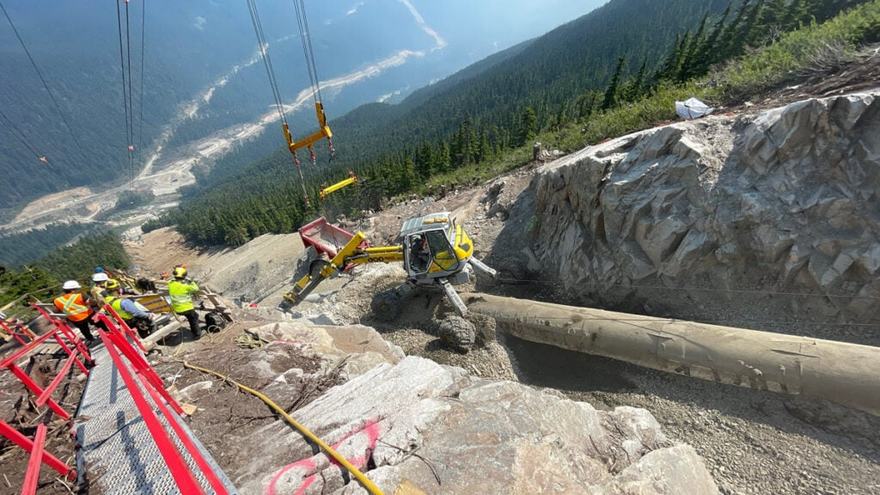
A crew working a rock cut on a mountainside pipeline right-of-way, with an excavator on the bench and a load on the line above.

Engagements

  • 10,600+ workers

    Trans Mountain Expansion Project

    A $30.9 billion national pipeline program. 56,000 paid orientation hours removed, competency verified in the field with no network, and every audit passed from month two.

    Full case study →
  • 4,500+ workers

    Coastal GasLink

    Brought in mid-project after two platforms had failed. Three remote camps unified, site access taken over, and full compliance inside 30 days.

    Full case study →
  • 400+ workers

    NGTL 2021 System Expansion

    A small project carrying the obligations of one twenty times its size. More capability than the alternatives, at a lower price, with standby billing when work stopped.

    Full case study →
  • 27 facilities

    Government-funded health authority

    Medical supplies, medications, equipment and PPE across 27 facilities and 200+ storage locations, some reachable only by air. First-year savings covered what the platform cost.

    Full case study →
  • 250+ businesses

    Alberta Avenue Business Association

    A consumer mobile app, a member business directory and an in-store QR scan that connects a promotion to an actual visit — delivered on a grant budget.

Summaries

Trans Mountain Expansion Project

Case Study

How a $30.9 billion national pipeline project cut 56,000 paid orientation hours and passed every audit from month two

Trans Mountain Expansion Project

A $30.9 billion Government of Canada infrastructure program — 10,600+ workers, 35+ subcontractors, 118 miles of Rocky Mountain corridor.

56,000+paid orientation hours eliminated
24 hoursfrom contract to production use
100%audit pass rate from month two onward

The situation

The Trans Mountain Expansion Project added approximately 609 miles (980 km) of new pipeline between Strathcona County, Alberta and Burnaby, British Columbia, at a cost Trans Mountain has stated as approximately $30.9 billion. Tansi’s client, a general contractor, delivered roughly 118 miles of it — close to one fifth of the new line — across two spreads in Rocky Mountain terrain, from three bases an hour apart, with limited and intermittent connectivity. It managed 10,600+ workers from 35+ subcontractor organizations.

Six or more systems had been tried and abandoned, and safety audits had found the gaps: the project could not reliably say who was on site, whether they were qualified to be there, or where workers’ personal health information was stored.

What Tansi did

  • Moved site orientation online. Workers completed it before arrival and were productive on their first shift, instead of spending a full paid day on site.
  • Verified credentials against the issuing authority. This surfaced tickets that were not legally recognized in British Columbia despite having been accepted.
  • Put competency proof in the field. A supervisor could confirm an operator was cleared for a steep-slope work area on a mobile device in minutes, offline — replacing a print-scan-email cycle that ran on office hours.
  • Held health data and backups in the country of origin. Verified residency including backups was the requirement that eliminated every other vendor. 200,000+ test records; contact tracing fell from days of phone calls to under fifteen minutes.
  • Reached the whole workforce in one message. 2,300+ workers in five minutes, after a mountainside collapse left the project with no way to notify anyone.

What changed

From month two onward the project passed its safety audits, and Trans Mountain scored them directly from Tansi reporting — the compliance record and the audit evidence were the same document. Orientation savings alone reached more than 56,000 paid hours across 8,000+ workers.

None of it was custom-built. The project deployed six standard Tansi modules and configured them as requirements emerged — which is why the first was live within 24 hours, and why an engagement that began as pandemic screening became the project’s workforce compliance system of record without a second procurement.

“On a project this size, the risk isn’t the technology — it’s a system that can’t change when the project does. Tansi asked what we needed, adapted to our project, and delivered in days rather than quarters. That’s not a feature. That’s the whole difference.”

— Project Safety Manager, TMEP contractor

Any public body is accountable for people it does not directly employ, arriving with credentials it is expected to have verified. Enterprise HR systems govern employees, not that population. Tansi covers the operational layer they were never built to reach — deployed alongside the systems an organization already owns.

Read the full case study →tansi.io/us/case-tmep

Covers data residency, competency verification, the audit outcome and the full results table.

Wade Mahowich president@tansi.io
1-844-TANSIAPP  |  1-844-826-7427
tansi.io/us

Read the full case study

Coastal GasLink

Case Study

Brought in mid-project to unify three remote locations — and given the keys to the gate

Coastal GasLink Pipeline Project

A $14.5 billion pipeline program — 4,500+ workers, three remote camps, 153 miles of northern British Columbia.

30 daysfrom implementation to project compliance
$500,000+in avoided trainer and camp cost
4,500+workers managed

The situation

Coastal GasLink is a 416-mile natural gas pipeline from Dawson Creek to the LNG Canada facility near Kitimat, British Columbia, reported at approximately $14.5 billion. Tansi’s client, the general contractor, delivered spreads 5, 6 and 7 — 153 miles, more than a third of the route and the largest single portion of the project.

Tansi arrived second. The contractor was months into construction, working from three remote camps roughly 75 miles apart, each with its own equipment yard and office complex. Each location knew its own situation; nobody had a reliable view across all three. Two platforms had already been implemented and had failed — they could not do what was asked, would not conform to how the project ran, and could not integrate with the project’s other systems, including the security system at the camp gates.

What Tansi did

  • Unified three separated locations. One worker record that every camp, yard and office worked from, current across all three within the working day.
  • Took over site access. Supplied and integrated a security system across all three camps. Access was granted from the compliance record itself — and removed the day a worker left.
  • Moved orientation online. 4,500+ workers oriented before they traveled, removing the on-site trainer at $750 a day plus $185 camp accommodation, six days a week.
  • Held the whole worker record. Safety tickets with expiry notifications, competency assessments, policy acknowledgements and payroll onboarding documentation — one onboarding, used by HR as well as safety.
  • Emptied the sea can. Five years of safety records, held as paper on site and in rented storage, scanned into searchable storage and filed systematically.

What changed

The project was compliant within 30 days of Tansi being implemented. Requirements kept surfacing over the engagement and kept being met: orientation and the platform delivered in Italian for around fifty workers, payroll documentation, contractor safety programs, and safety KPIs reported daily across all three spreads.

A Tansi team member worked on site throughout — scanning records, installing the security system, training people in their own environment, and finding what else could be streamlined. That is why a mid-project change took thirty days rather than a year.

“The hard part of a project like this isn’t your own workforce — it’s everyone else’s. Tansi understood that, and built to how the project actually ran instead of asking us to run it their way. ‘How compliant are we?’ stopped being a question I had to ask anyone.”

— Corporate Safety Manager, CGL general contractor

Any organization running sites that are far apart, staffed largely by people it does not directly employ and governed by credentials that expire, has this problem. The obligations differ in a school district or a health system. The structure does not.

Read the full case study →tansi.io/us/case-cgl

Covers the failed predecessors, the access integration, records retention and the full results table.

Wade Mahowich president@tansi.io
1-844-TANSIAPP  |  1-844-826-7427
tansi.io/us

Read the full case study

NGTL 2021 System Expansion

Case Study

Understood the requirement, supplied the features others couldn’t — and cost less

NGTL 2021 System Expansion — Robb Section

A $2.3 billion pipeline program — 400+ workers, 10+ contractor organizations, 26 miles in west-central Alberta.

100%completion on all 16 safety meetings
3 → 1systems replaced by one platform
400+workers across 10+ contractors

The situation

The NGTL 2021 System Expansion added approximately 214 miles of pipeline in eight sections across Alberta, approved by the Government of Canada in October 2020 at approximately $2.3 billion. Tansi’s client, the general contractor, delivered the Robb Section — 26 miles in the Edson South area — from March 2021 to December 2022, covering 400+ workers across 10+ contractor organizations.

The contractor went to market before it came to Tansi, and found that none of the vendors it evaluated could supply what the project required. Tansi could, and cost less to set up and less to run. The reason is that this project did not need one product. It needed three — workforce compliance, a learning management system and a survey tool — and Tansi was all three on one platform.

What Tansi did

  • Tied compliance to the duty, not the person. 14+ duty types were configured, each carrying its own requirement set. Move a laborer onto a water truck and the license requirement appears automatically.
  • Ran every safety meeting through the LMS. 16 monthly meetings with 100% completion and a record per person per meeting, achieved through automated reminders rather than standing a crew down. TC Energy hosted its own project updates through the same channel.
  • Gave the workforce an anonymous channel. Roughly half the meetings carried a quiz or an anonymous survey, used to track morale and surface concerns early. Because the survey rides on a module everyone completes, the response rate is the completion rate.
  • Onboarded to megaproject standard. Online orientation before arrival, safety tickets tracked with issuer, course, expiry and scan, notification at 90, 60 and 30 days, and contractors onboarded as entities.
  • Charged standby when the work stopped. Construction pauses for spring break-up. The platform was not in active use for six of the twenty-two months, and those months were billed at a standby rate rather than the full rate.

What changed

Community participation reporting went beyond headcount: how many workers and their status, the quality of the employment — labor, equipment operation, supervisory or management — where each worker lived relative to the project, and whether they were still active month to month. All of it came out of onboarding data the project already captured.

Robb is the smallest engagement in this series and the one that makes the clearest argument. A 26 miles section with 400 workers carries the same regulatory obligations, the same duty of care and the same audit exposure as a project twenty times its size — without a proportionally larger budget. The usual outcome is that smaller operations settle for a lesser standard. This one did not have to.

The shape is one most public bodies will recognize: a modest budget, a workforce largely employed by somebody else, obligations that do not scale down, and a season when the work stops. A school district assigning a bus route, a health system assigning a procedure — define the role once with its requirements, and assign it as often as you like.

Read the full case study →tansi.io/us/case-ngtl

Covers the duty model in full, the anonymous survey capability, participation reporting, the commercial model and the complete results table.

Wade Mahowich president@tansi.io
1-844-TANSIAPP  |  1-844-826-7427
tansi.io/us

Read the full case study

Government-funded health authority

Case Study

It paid for itself in year one — out of stock they had already bought

Government-funded non-profit health authority

Medical supplies, medications, equipment and PPE across 27 facilities and more than 200 defined storage locations — some of them reachable only by air.

Year onesavings covered what the platform cost
200+storage locations on one inventory record
1,115 mito the furthest nursing station

The situation

A government-funded non-profit health authority delivers services across a network that is not in one place: two central warehouses, five regional offices, eight nursing stations, ten health centers and two additional sites. Within them sit more than 200 defined storage locations holding thousands of line items — medical supplies, medications, equipment and PPE. Some facilities are in cities, some in remote communities, and some are reachable only by air. The furthest nursing station is 1,115 miles from the central warehouse, so a correction is never quick and never cheap.

It was managed with spreadsheets, paper, and an ERP system that could not handle inventory properly. Stock position was established by counting everything once a month, which made the record accurate one day in thirty. Between counts, nobody could say with confidence what was where — so items went missing untraced, over-ordering tied up money in stock that expired before it was used, and shortages landed at exactly the locations least able to absorb one.

What Tansi did

  • Put the whole network on one inventory record. Every one of the 200+ storage locations is a defined place with its own stock position, worked from by warehouse staff, regional offices, nursing stations and health centers alike — with lot and expiry tracked on medications, and equipment held in the same system as the supplies it consumes.
  • Asked a longer question before recommending a purchase. Replenishment weighs current stock at the location, the actual consumption rate there, surplus held elsewhere in the network, and items approaching expiry. Where the network already holds what a location needs, the system recommends a transfer instead of an order.
  • Left the finance system alone. The authority runs PeopleSoft and it was never going anywhere. Tansi integrates with it rather than displacing it, and a vendor portal lets suppliers submit shipping documents, acknowledgements and invoices against the order they belong to.
  • Ran the warehouses on the record, not on the count. Receiving against the purchase order, picking against the request, transfers out to sites, and stock counts that update the record continuously rather than replacing it once a month.
  • Asked every location what it will need. One campaign goes to the whole network at once, each location answers the same structured questions with comments alongside the numbers, and the orders are raised directly from the replies — with no transcription step in between.

What changed

In the first year, the savings already covered what the health authority spent on the platform. None of it came from cutting service. It came from three places: better utilization of stock already purchased, less waste as product that used to expire on a shelf now gets used, and an end to over-ordering once replenishment was driven by consumption rather than by a monthly guess. Every transfer recommended in place of an order is stock the authority had already paid for, put to use rather than replaced.

One number went the other way, and it is worth saying plainly: warehouse time went up. Recording receipts, picks, transfers and counts properly takes longer than not recording them. Accuracy went up further — stock position is now correct continuously rather than for one day a month, and when the record and the shelf disagree the difference can be traced instead of absorbed. The time moved out of chasing missing items, raising emergency orders and rebuilding the position at month end.

The shape is one most public bodies will recognize. Any organization distributing physical goods across sites it does not sit in has this problem — a school district storing supplies across campuses, a public works department with parts across yards, an emergency service holding consumables across stations. A health authority is the sharpest version because of how far the goods travel and how badly a shortage lands.

The full case study covers the five requirements in detail, the PeopleSoft integration and vendor portal, how a campaign runs, the honest note on warehouse time, and the complete results table.

Wade Mahowich president@tansi.io
1-844-TANSIAPP  |  1-844-826-7427
tansi.io/us

Read the full case study

Alberta Avenue Business Association

The situation

A business improvement area with more than 250 member businesses, running its membership records on paper and in Office documents, and reaching customers through social media and print.

What Tansi did

  • Made the directory the system of record. Every member business held once, with profile, hours, category, menu and imagery, so every surface that shows a business reads from the same record.
  • Built a free consumer app on iOS and Android. Search, category browsing, menus and reviews, putting 250+ businesses in a customer’s pocket.
  • Attached promotions to the business. No separate coupon system to keep in sync, because there is only one record.
  • Closed the loop with an in-store scan. Customers scan a QR code at the business when they buy, recording the visit against it — the gap almost no promotion program can bridge.
  • Handed it over. Hosted and operated by the association’s own IT and web developer, so there is no lock-in to the builder.

What changed

Delivered inside a fixed municipal and provincial grant budget, built in dependency order so each stage stood alone. Several other business associations have since asked about the platform.

Where ERP ends, Tansi begins.

See it running on your own operation

Bring us a workflow that is currently held together by a spreadsheet and a shared drive, and we will show you what it looks like in Tansi. No scripted demo. No discovery fee.